Many of Australia’s most spectacular cruising grounds are protected as marine parks, and parts of the coastline are Aboriginal land or national park. Whether you need a permit depends on where you are cruising and whether your superyacht is operating privately or commercially.
Start planning early. Some permits take several weeks to process.
Permits at a glance
| Area | Permit needed? | Issued by | Lead time |
|---|---|---|---|
| Great Barrier Reef Marine Park (Queensland) | Commercial superyachts (including charter): yes. Private superyachts: no, but anchorages must be booked for yachts over 35 metres | Great Barrier Reef Marine Park Authority (Reef Authority), usually arranged through a local superyacht agent | Up to 50 business days for permits |
| NSW marine parks | Commercial superyachts, including yachts staffed by professional crew: yes | NSW Government, usually arranged through a local superyacht agent | At least 6 weeks |
| Lord Howe Island | All vessels must apply to the Lord Howe Island Board for entry. Marine park permit rules as for NSW marine parks | Lord Howe Island Board | Apply before departure, as biosecurity steps are required |
| Australian Marine Parks (Commonwealth waters, including the Coral Sea and Elizabeth and Middleton Reefs) | No permit for private boating, diving or snorkelling. Sanctuary Zones are closed. Some activities, such as fishing at Elizabeth Reef, need a permit | Parks Australia | Check before you go |
| Aboriginal land in the Northern Territory (including Arnhem Land and intertidal waters) | Yes, to enter or land | Northern Land Council (or the relevant land council) | At least 10 days |
| Kimberley (Western Australia) | Visitor passes or permits are needed for some Traditional Owner country and reserves | Traditional Owner groups, through your agent | Arrange before departure |
| Tasmanian national parks | A parks pass is needed to enter national parks ashore | Parks and Wildlife Service Tasmania | Buy before your visit |
Great Barrier Reef Marine Park
Commercial or private?
If your superyacht is providing transport, accommodation or services to guests who have paid for passage or charter, it is a commercial superyacht and needs a permit to operate in the Great Barrier Reef Marine Park. Permits can take up to 50 business days, so contact the Reef Authority early. All other use is treated as recreational, and no permit is needed.
Where can your superyacht go?
Where you can go and anchor depends on your yacht’s length. For marine park purposes, length is 110 per cent of the vessel’s load-line length.
| Length | Anchoring and access |
|---|---|
| 35 metres or less | Access to most areas, following zoning, group size limits and no-anchoring areas. Use moorings where available |
| More than 35 metres to less than 70 metres | Anchor in designated anchorages (with a booking), including superyacht anchorages in the Whitsundays. Use the tender to visit locations, within group size limits |
| 70 metres or more | Anchor in designated anchorages (with a booking). A licensed pilot is required in compulsory pilotage areas |
- Special rules apply in the Cairns, Hinchinbrook and Whitsunday planning areas, covering vessel length, group size, jet skis and helicopters.
- Foreign-flagged private superyachts must give the Reef Authority their ABF Control Permit to get login details for online anchorage bookings. See Clearance Options.
- Contact the Reef Authority before your visit if you plan to use helicopters or semi-submersibles.
- Check zoning maps for each area. For example, no fishing is allowed in Marine National Park (green) zones.
- Superyachts 50 metres or more must report to REEFVTS, and those 70 metres or more need a licensed pilot in compulsory areas. See Pilotage Requirements.
More information: Reef Authority: Superyachts, the Superyacht Guide to the Whitsundays and the Superyacht Cruising Guide (use the Whitsundays guide for that area).
NSW marine parks
NSW has six marine parks, covering about a third of the state’s tidal waters. From north to south:
- Cape Byron Marine Park
- Solitary Islands Marine Park
- Lord Howe Island Marine Park
- Port Stephens-Great Lakes Marine Park
- Jervis Bay Marine Park
- Batemans Marine Park
Does your superyacht need a permit?
A superyacht needs a permit to operate in NSW marine parks if it is carrying guests who have paid for passage or charter. Superyachts staffed by professional crew are also considered to be undertaking a commercial activity and need a permit.
How to get a permit
- Superyachts visiting from overseas or interstate are advised to use a permit held by a local superyacht agent.
- Superyachts based in NSW, or spending extended periods cruising the NSW coast, can apply for their own vessel-specific permit.
- One permit can cover visits to several marine parks.
- Apply at least 6 weeks before your first planned arrival. You only need to give a general outline of planned activities, not specific dates.
- Permits are usually issued for 12 months, then renewed for 3 years.
- Vessels operating under a permit should notify the marine park manager at least 24 hours before arriving.
Anchoring, moorings and activities
- Anchoring is allowed in NSW marine parks, but not in sanctuary zones unless in an area or at a mooring designated for that purpose.
- Avoid anchoring on sensitive habitats such as coral, sponge gardens and seagrass.
- Public courtesy moorings are generally limited to vessels up to 20 tonnes displacement for up to 24 hours.
- No fishing or collecting is allowed in sanctuary zones. Fishing gear must be stowed and lines unrigged when moored or anchored in a sanctuary zone.
- Jet skis and other personal watercraft are restricted in several marine parks and banned at Lord Howe Island.
- Do not discharge ballast water taken from outside a marine park while inside it.
Visits to some areas, such as Sydney Harbour, may also need approval from Transport for NSW. More information: NSW marine parks, including zoning maps and user guides for each park.
Lord Howe Island
- All private and commercial vessels must apply to the Lord Howe Island Board for entry. The process includes biosecurity steps before departure and during the visit. You will receive a conditional approval to present to the Port Operations Manager on arrival.
- Contact the Lord Howe Island Board on +61 2 6563 2066 or arrivals@lhib.nsw.gov.au. Port Operations monitors VHF channels 12 and 16.
- There is no berthing for superyachts. Vessels longer than 5 metres cannot anchor in the lagoon, and no vessel may anchor in a sanctuary zone.
- Lord Howe Island is a tech stop only for vessels arriving from or departing for overseas. See Arrival, Border & Biosecurity.
More information: Lord Howe Island Board: Visiting vessels and Lord Howe Island Marine Park.
Australian Marine Parks
Commonwealth waters beyond state limits include Australian Marine Parks such as the Coral Sea Marine Park and the Lord Howe Marine Park, which includes Elizabeth and Middleton Reefs.
- Private boating, overnight stays on board, diving and snorkelling do not need a permit.
- Sanctuary Zones are closed to the public.
- Fishing is allowed at Elizabeth Reef with a permit, but not at Middleton Reef. An exclusion zone applies around unexploded ordnance at Middleton Reef.
- Commercial tourism, including charter, may need approval from Parks Australia.
More information: Australian Marine Parks: General use and Lord Howe Marine Park.
Aboriginal land and sea country
Northern Territory
Much of the Northern Territory coast, including Arnhem Land, is Aboriginal land. A permit from the Northern Land Council (or the relevant land council) is needed to enter Aboriginal land, including the intertidal waters over it. Allow at least 10 days for Traditional Owners to be consulted. Some areas have access fees.
More information: Northern Land Council: Permits.
Kimberley
Traditional Owner groups manage access to much of the Kimberley coast. For example, a Dambimangari Visitor Pass is needed to visit Dambimangari country, which includes Horizontal Falls (Garaan-ngaddim), and some reserves need a separate Aboriginal Lands Trust permit. Your agent can help arrange the right passes for your itinerary.
More information: Dambimangari Visitor Pass.
National parks ashore
Many anchorages sit next to national parks. In Tasmania, a valid parks pass is needed to enter national parks, and a Holiday Pass covers all parks for up to two months. Check the rules for parks in other states before going ashore.
More information: Parks and Wildlife Service Tasmania.
Regional superyacht guides
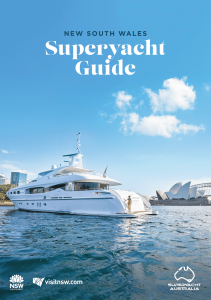
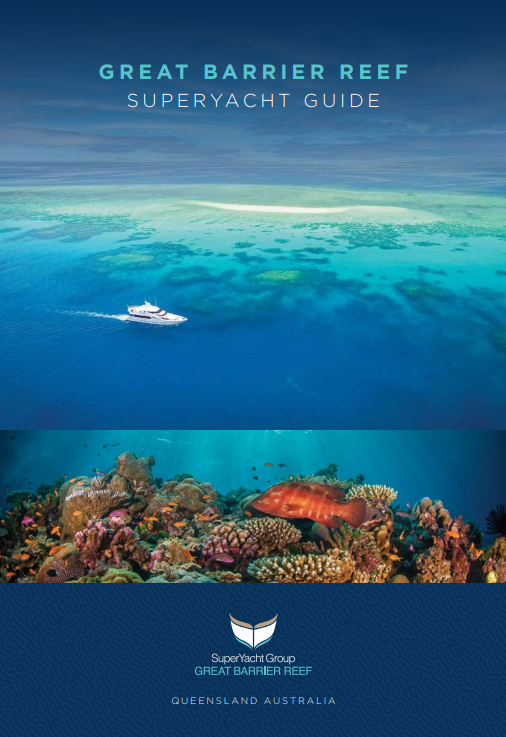
For detailed cruising information, anchorages and local contacts, see the regional superyacht guides below.
Common questions about marine park permits
Does a private superyacht need a permit for the Great Barrier Reef?
No. Recreational superyachts do not need a Marine Park permit, but yachts over 35 metres must anchor in designated anchorages with a booking. Commercial superyachts, including those on charter, need a permit.
Does our superyacht need a permit for NSW marine parks?
Yes, if it is chartering or carrying paying guests, or is staffed by professional crew. Most visiting superyachts use a permit held by a local superyacht agent.
How long do permits take?
Allow up to 50 business days for a Great Barrier Reef Marine Park permit and at least 6 weeks for a NSW marine parks permit. Northern Land Council permits need at least 10 days.
Can we visit Elizabeth and Middleton Reefs?
Yes. Visiting, diving and snorkelling do not need a permit. Fishing needs a permit at Elizabeth Reef and is not allowed at Middleton Reef.
Can guests go ashore on Aboriginal land?
Only with the right permit or pass. Arrange these through your agent or the relevant land council or Traditional Owner group before you travel.
Last reviewed October 2026. Requirements change: always confirm with the relevant marine park authority, land council or a Superyacht Australia member agent.